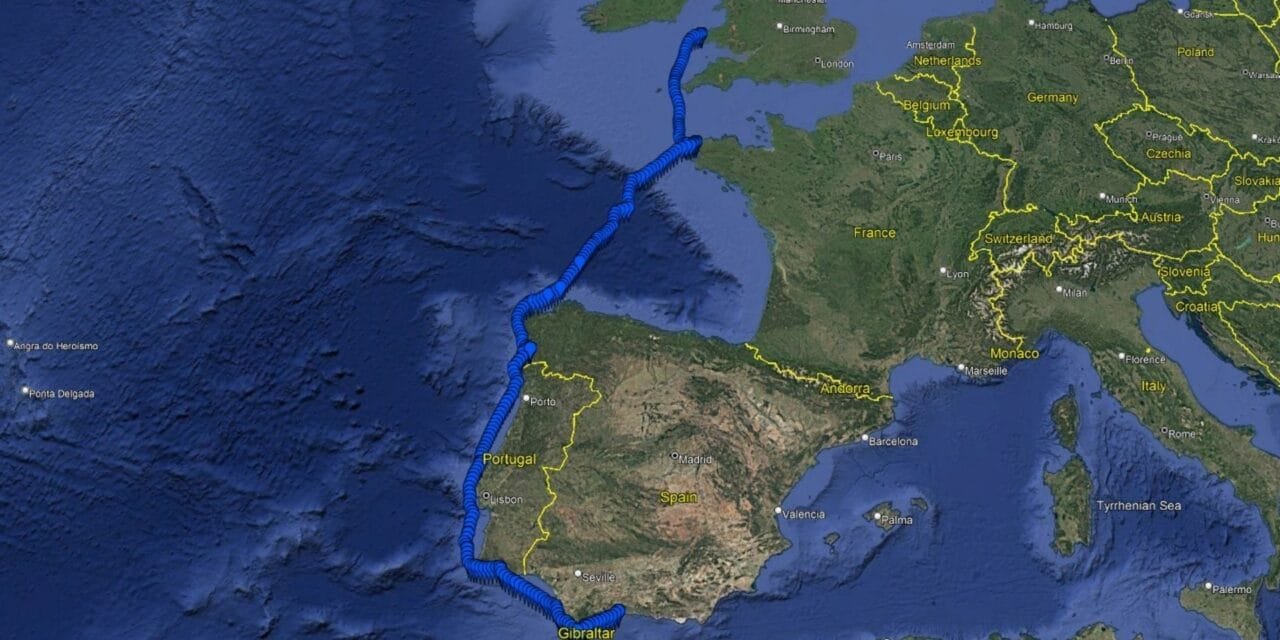
Sailing from UK to the Mediterranean and back is an iconic journey that offers excitement and adventure, but it also comes with its fair share of challenges. This ideal for Miles Building route, spanning the English Channel, the Bay of Biscay, and the Iberian Peninsula, requires careful planning, knowledge of weather patterns, and awareness of potential dangers. In this post, we’ll explore the key elements of this passage, including best practices, potential hazards, and practical advice for a successful voyage.
This guide is part of our professional overview of the world’s major sailing routes and passages used in yacht delivery.
If time, wind, or waves are not on your side, Seven Seas is here to offer professional yacht delivery services, ensuring your boat arrives safely, while you remain stress-free.
We deliver boats from the UK to the Med every year. The Bavaria 31 from Cardiff to Palma is a typical example: 1,870 NM, 23 days, six port stops, written report at the end.
Weather Patterns and Prevalent Winds
Understanding the weather along your sailing route is essential to avoid unnecessary risks and to harness the wind effectively.
- Summer Sailing (June to September): During the summer, the winds are generally more predictable. The Nortades, strong north-easterly winds, dominate the Portuguese coast and can be challenging for yachts heading north. Along the Bay of Biscay, light to moderate north-westerly winds are common, but they can quickly turn to stronger westerlies, particularly after low-pressure systems pass through.
- Winter and Spring (October to May): During the winter months, the weather can become significantly more volatile. Atlantic storms send powerful depressions across the Bay of Biscay and the Iberian coast, making the return leg from the Mediterranean to Northern Europe more difficult. The Mediterranean itself is known for its powerful Mistral and Tramontana winds, which can create challenging conditions for sailors.
Not enough time to sail it yourself? See how professional yacht delivery works or get a free quote.
The Nortades
- Timing Your Passage North: If you're sailing north along the Portuguese coast during the summer months, when the Nortades blow strongest, use the land breeze in the mornings. These early light winds allow you to make progress north before the afternoon winds strengthen. The Nortades are typically strongest between June and August, peaking in the afternoon as land temperatures rise.
Abnormal Waves in the Bay of Biscay: The Danger of the Continental Shelf
One of the most notorious sections of this route is the Bay of Biscay, particularly near the continental shelf, where abnormal or rogue waves can form. This region is infamous for steep and high waves, which are more likely to occur where the deep waters of the Atlantic suddenly meet the shallower continental shelf. Here’s why this area is particularly dangerous:
- Wave Formation: The continental shelf in the Bay of Biscay rises sharply from depths of 4,000 metres to less than 200 metres near the coast. When large Atlantic swells travel over the deep ocean and hit the shallower waters of the shelf, they can become compressed, leading to a phenomenon known as wave shoaling. This can cause waves to increase in height dramatically over a short distance.
- Rogue Waves: The Bay of Biscay is known for rogue waves - unexpected, unusually large waves that can appear suddenly and pose a serious threat to vessels. These waves, sometimes double the height of surrounding waves, are most likely to occur during or after storms, when multiple wave systems converge.
Table: Conditions in the Bay of Biscay
| Condition | Details |
|---|---|
| Normal Wave Height | 2-3 metres |
| Rogue Wave Height | Can exceed 10 metres |
| Common Wind | North-westerly in summer, westerly in winter |
| Worst Time to Cross | Autumn and Winter (October to March) |
Best Practice: To minimise risk, time your crossing of the Bay of Biscay during stable weather, preferably in summer, when high pressure dominates and conditions are calmer. Always keep an eye on swell height forecasts, especially near the shelf, and consider detouring further offshore to avoid shallow waters where waves can steepen.
Best Practices for the Passage
- Time Your Departure Carefully: Whether you’re heading to the Mediterranean or returning north, timing is everything. For smoother conditions, depart Northern Europe in late spring or early summer (May-June) to take advantage of more settled weather. Avoid crossing the Bay of Biscay in autumn or winter unless you're prepared for rough seas.
- Fishing Nets and Orcas: Along the coasts of Portugal and Spain, watch out for fishing nets, particularly near major fishing ports like Vigo and Porto. Recent years have also seen increasing orca activity along the Iberian Peninsula. These orcas have been known to approach boats, sometimes interacting with rudders. Stay informed and report any sightings to local authorities.
- Avoiding Strong Currents: The Strait of Gibraltar has some of the strongest currents you’ll encounter on this route, with Atlantic water rushing into the Mediterranean. To avoid the worst of the current, time your transit for slack water, when the current is weakest.
- Taking Advantage of the Nortades: If you’re sailing south, the Nortades along Portugal’s coast will provide strong winds to push you along quickly. However, if you're sailing north against the Nortades, plan to sail early in the morning, before the winds reach their full strength in the afternoon.
- Keep close (30-50 NM) to the ships routes. You can easy sail closer if you need help, advise or just want to pass a message. One time my sat phone was out of minutes limits. So, I asked one of passing ship to send sms to my friend "buy me 100 Iridium minutes, please Mark". And they did it 🙂 You can also ask for weather forecast for example when sailing from Ireland and after many days on the sea you don't know what to expect close to Finisterre - should you heading A Coruna or keep far from shore and sail back closer near Vigo or even Peniche. So, keep close but not too close. Especially avoid tacking on container ships route. Of course they have radars, AIS on perfect watch, but you have only small stern light close the sea level which is invisible during rain or fog.
Easy Access Ports and Safe Havens
Knowing where to find sheltered harbours is key to a safe and enjoyable voyage. Here are some recommended stopovers along the route:
| Region | Safe Harbours | Facilities |
|---|---|---|
| English Channel | Dover, Plymouth, Brest | Well-equipped marinas with provisioning and repairs |
| Bay of Biscay | La Coruña, Gijón, Bilbao | Safe havens with marina services and supplies |
| Spanish Atlantic Coast | Vigo | Safe marinas, friendly people, lot of bays. |
| Portuguese Coast | Cascais, Lisbon, Lagos | Popular stopovers with excellent marina facilities |
| Mediterranean Coast | Gibraltar, Málaga, Palma de Mallorca, | Major ports offering full services |
These ports provide easy access to repairs, refuelling, and provisioning, making them ideal stopovers during a long passage.
When Sailing Gets Tough, Call Seven Seas
At Seven Seas, we understand that not every yacht owner has the time or desire to deal with the unpredictable conditions of the Bay of Biscay, the fierce Nortades, or the challenging currents of Gibraltar. Our professional yacht delivery service ensures your yacht is transported safely, with minimal wear and tear, so you can relax knowing your boat is in expert hands. Whether it’s a one-way trip to the Mediterranean or a round trip back to Northern Europe, we take care of everything - from the planning to the execution - ensuring peace of mind for our clients.
Conclusion: Mastering the Sailing Route from Northern Europe to the Mediterranean
Sailing the route from Northern Europe to the Mediterranean and back is a thrilling experience, but it requires careful planning, awareness of the dangers (such as abnormal waves in the Bay of Biscay), and an understanding of weather patterns. By following best practices, staying informed about potential hazards, and knowing when to take shelter, you can enjoy a safe and successful passage.
And remember, if the wind, waves, and current are too much to handle, the team at Seven Seas is here to deliver your yacht with professionalism and care. We make the journey, so you don’t have to.
FREQUENTLY ASKED QUESTIONS:
What challenges await me on the UK-MED route?
When planning a passage, you must be prepared for heavy ship traffic, strong currents, large waves, low temperatures, fishing nets, active military training areas, and orcas.
What are the main options for getting my boat from the UK to the Mediterranean?
There are three principal methods for moving your vessel from the UK to the Mediterranean, each with distinct advantages and disadvantages:
- Sail Around the Iberian Peninsula: This is the classic, all-sea route and the longest in terms of distance.
- Transport by Lorry: This is the quickest method. Your boat is lifted from the water in a port (for example, in northern France), secured onto a specialised lorry, and driven to a Mediterranean port where it is lifted back in.
- Navigate the French Inland Waterways: This route offers a unique passage through the heart of France via its network of canals and rivers, such as the famous Canal du Midi.
Can I take my sailboat through the French canals, and what are the limitations?
Yes, it is entirely possible to navigate from the Atlantic to the Mediterranean through the French waterways. However, this route comes with a set of strict physical limitations that make it unsuitable for many modern sailing yachts. Before committing to this option, you must ensure your vessel complies with the following critical restrictions:
1. Draft: The canals are shallow. The absolute maximum draft for navigating the north-central French system is 1.8m, with many sections of the Canal du Midi being as shallow as 1.4m to 1.5m. Even boats within this limit can expect to encounter shallow spots and should navigate with caution.
2. Mast: Your mast must be unstepped (taken down) before you enter the canal system and re-stepped upon reaching the Mediterranean. The route passes under numerous low bridges, making passage with a mast impossible.
3. Propulsion: You do not sail in the canals. Passage is made entirely under power, using your inboard motor.
Will my UK electrical appliances and gas bottles work in Europe when I sail from the UK to the Mediterranean?
The short answer is yes for electricity (mostly), but no for gas without some adaptation.
• Electricity: You're in luck here. European marina shore power is standardized at 230V / 50Hz, the same as in the UK. Furthermore, the ubiquitous blue CEEform (IEC 60309) shore power connectors are the same in both the UK and Europe, so you will not need new power cords or adapters. The only potential issue is for very old UK boats or those built to a different standard that are not wired for 230V; these vessels may require an onboard transformer to be compatible.
• Gas: UK propane tanks, regulators, and fittings are not the same as those used on the continent. Butane is more commonly available for cooking gas than propane in many Mediterranean countries. Getting UK-style tanks refilled can be very difficult, and you will likely need to purchase a European-style bottle and the necessary adapters to connect it to your existing system.
Related Sailing Routes & Passages:
- Crossing Bay of Biscay by Sailboat - few words how to cross Bay of Biscay
- Sailing Across the Atlantic: A Comprehensive Guide for Fellow Sailors - read it before your first Atlantic passage
- Sailing in Gibraltar - How to cross the Strait of Gibraltar? - how and when to cross Gibraltar Stait
Sources:
- Weather Patterns in Northern Europe and Mediterranean
- Bay of Biscay Rogue Waves - Understanding the Risks
- Maritime Safety in the Strait of Gibraltar
Read also
- Crossing the Bay of Biscay by sailboat
- Sailing in Gibraltar: crossing the Strait
- Sailing across the Atlantic
- Bavaria 31, Cardiff to Palma UK to the Balearics in 23 days, with the owner's report
- Hanse 575, Gdansk to Alghero Baltic to the Med by Biscay and Gibraltar, 2,761 NM
- Sample passage brief, Sardinia to Denia What our office sends the skipper before and during a passage
Moving your yacht from the UK to the Mediterranean?
We deliver yachts UK → Med every year - around Biscay and Iberia, or via the French canals when the boat allows. Tell us the boat, the route and the dates - you get a free, no-obligation quote within 24 hours.

